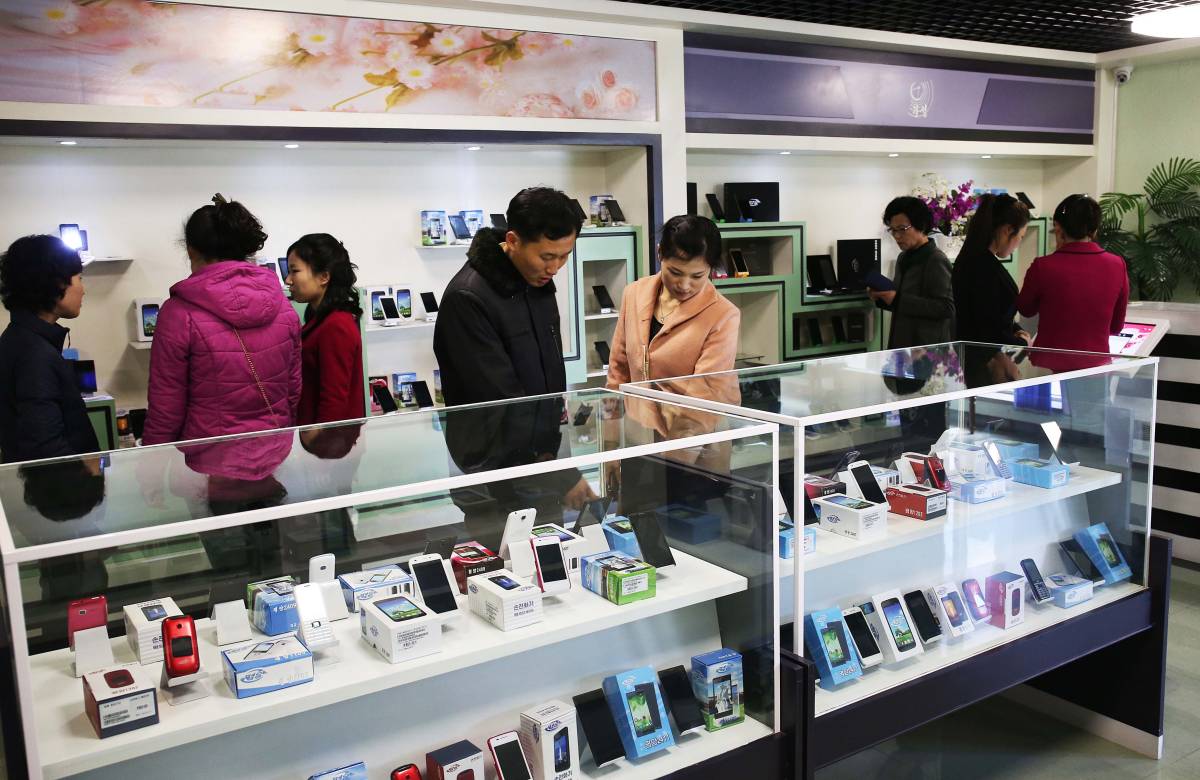
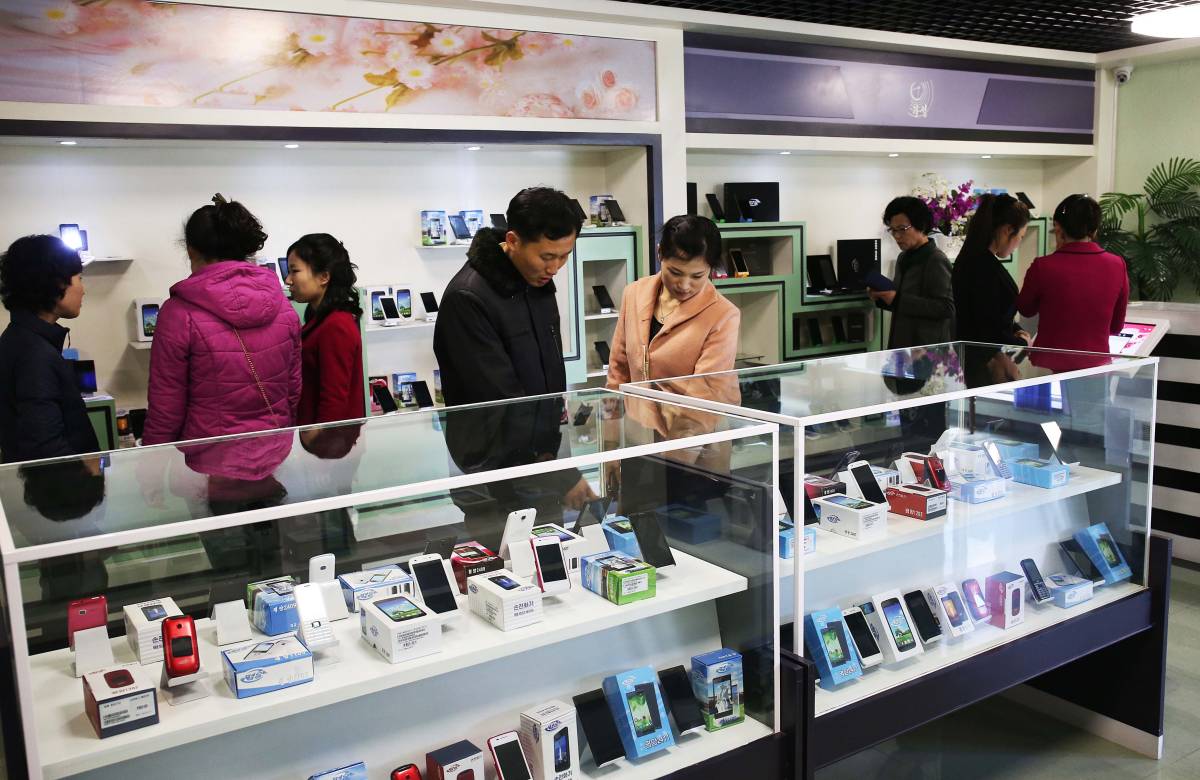
North Korea has quietly raised the prices of two mobile phone models sold in four border provinces, adding 500 Chinese yuan (about $74) to each. The change only recently came to light, even though people in the region have been grappling with the higher prices for weeks. Phone prices were already out of reach for many North Korean people, and the latest hike is pushing some would-be buyers to abandon their purchases altogether.
A source in North Hamgyong province told Daily NK on Monday that post offices and service centers across the four border provinces, Ryanggang, North Hamgyong, Jagang and North Pyongan, received an order on July 13 to raise phone prices, and the higher prices took effect that same day.
According to the source, the Samtaesong 8, known as the newest model on the market, rose from 6,500 to 7,000 Chinese yuan (about $1,037). The more widely purchased Madusan 222 rose from 3,500 to 4,000 Chinese yuan (about $593), with both phones seeing the same 500 yuan increase applied uniformly.
The source explained that the identical price hike applied across all four border provinces suggests the decision came from the central government, rather than from local authorities acting on their own. In North Korea, prices for goods produced and consumed locally are typically set at the provincial or city level, but communication devices such as mobile phones are sold and registered under strict central government control.
Central control raises questions over motive
Some in the region believe the recent rise in exchange rates, combined with higher import costs tied to component shortages, may have driven the price increase. Others suspect the state artificially raised the foreign currency price of relatively expensive goods like mobile phones to absorb foreign currency held by North Korean people.
The exact reason behind the simultaneous price hike across the four border provinces has not been disclosed, the source said. Some people view it as an attempt to slow the pace at which new phones enter circulation, though no separate directive to tighten registration or inspections accompanied the increase, according to the source.
The sudden increase has drawn complaints from North Korean people, many of whom would struggle to raise 500 yuan on short notice. Phone prices already running into the thousands of yuan were a heavy burden before the hike, and the added cost has made that burden feel even greater.
“An ordinary person can no longer afford even one mobile phone,” one person said, according to the source. Another comment circulating locally put it more bluntly: “Concrete walls aren’t only found at the border. The state has built an invisible concrete wall with mobile phone prices.”
The source added that workers and farmers who earn just enough to get by day to day would struggle to save enough for a phone even over a full year. Many North Korean people who had planned to buy a new phone or replace an old one are now abandoning or delaying those plans, the source said.
Reporting from inside North Korea
Daily NK operates networks of sources inside North Korea who document events in real-time and transmit information through secure channels. Unlike reporting based on state media, satellite imagery, or defector accounts from years past, our journalism comes directly from people currently living under the regime. We verify reports through multiple independent sources and cross-reference details before publication.
Our sources remain anonymous because contact with foreign media is treated as a capital offense in North Korea — discovery means imprisonment or execution. This network-based approach allows Daily NK to report on developments other outlets cannot access: market trends, policy implementation, public sentiment, and daily realities that never appear in official narratives.
Maintaining these secure communication channels and protecting source identities requires specialized protocols and constant vigilance. Daily NK serves as a bridge between North Koreans and the outside world, documenting what’s happening inside one of the world’s most closed societies.