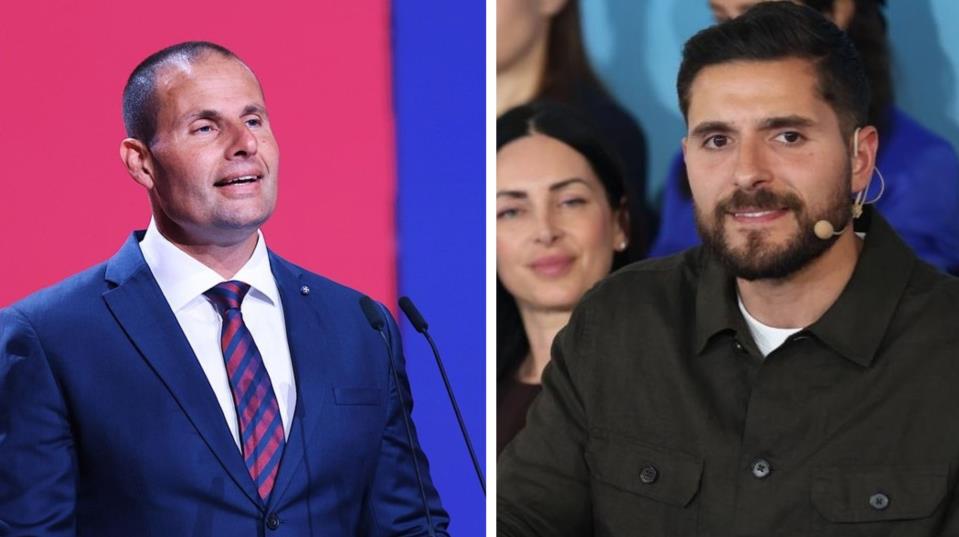
Kyle Patrick Camilleri
Wednesday, 13 May 2026, 22:24
Last update: about 3 hours ago
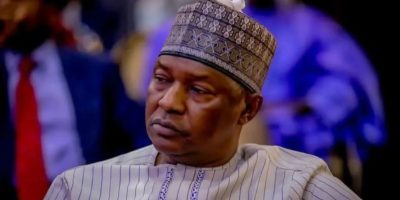
In his first address as a candidate of the Nationalist Party, Conrad Borg Manché told Labour supporters listening in not to let either fear or party loyalty hold them back from changing their vote.
During PN’s mass rally on Wednesday evening, its new surprise candidate, former PL mayor in Gżira, Conrad Borg Manché, shared why he decided to run on the PN ticket in this coming general election after years with the Labour Party and after contesting the European Parliament and local council elections independently in 2024.
Borg Manché was all smiles as he was greeted by PN supporters in attendance with long applauses and even a standing ovation.
Borg Manché called upon all PL supporters, as a recent ex-PL representative himself, to vote for the Nationalist Party, stating that “the PN is offering a serious alternative that our country needs” and that it is “the only shield that can defend our environment and our people.”
“To the Labourites listening to this, I know it is not easy to change your vote – I know your party is your second family – but I need you to open your eyes and see the reality of where this country is headed,” Borg Manché said.
He implored traditional PL supporters to shift away from their party loyalty for the benefit of the country, noting that the Labour Party no longer holds the values that they cherish.
In his message to Labour Party voters, the former Gżira mayor said that “the country you believed in – the workers’ party that I also believed in – is no longer there. It has been captured by a clique that is only interested in its pockets and in its friends’ friends.”
“Do not let your party loyalty blind you from the great damage that is being done to the country. Do not let your fear hold you back. Our true loyalty should not lie in political parties, but in our children, in our families, and in our Malta,” he said.
Borg Manché told disgruntled PL supporters that if they remain home and abstain from voting, then “you will be allowing this clique to continue destroying everything dear to us.” Hence, he called for them to unite under the blue flag to “fight for open spaces where children can play and breathe fresh air” and for “our land’s heritage.”
“To bring the change our country urgently needs, we must not fight alone. We must not remain divided while those in government continue to do as they like to our country,” he said.
He said that he had initially believed in the Labour movement, as many other genuine people did, because they all believed in its message to spread social justice for local communities. He remarked that he is aware that these genuine voters feel “betrayed” to see that the PL has been “taken up by four people who are only interested in filling their pockets and retaining power,” adding that he felt this same betrayal as Gżira mayor.
On this, he cited how on the first day of his second term as Gżira mayor, “on the same day I was swearing to serve with honesty and loyalty, others were signing to destroy the only open space residents had” as the permit for a petrol station to be developed in the locality’s sole garden was published.
He said that among the several reasons he later resigned from the Labour Party was because his conscience could not allow him to serve those who have neglected the people.
During his speech, he provided more context behind this decision just a few hours after writing a brief explanation on this on social media where he said that a hollow family court reform served as the last straw to push him towards running alongside the Opposition.
Borg Manché labelled this family court reform as “another betrayal” committed by the incumbent PL administration. He noted that despite the PL government promising a serious Family Court reform, “after long years, wasted time, and empty promises, nothing has happened” and “nice words on paper never turned into action.”
He said that this reform is an urgent necessity and a matter of social justice “that this government has totally neglected.”
Borg Manché also dedicated part of his first address as a PN candidate to Mirabel Falzon and her family. In July 2024, Falzon, aged 22, lost her life in a rockfall in Marsascala. Borg Manché said that she, “a woman who was in the prime of her life,” is a victim of this government because no action was taken after relevant authorities were notified of the danger at risk in the area before her untimely passing. He added that Falzon’s family, nearly two years after her passing, is still waiting for a response to this accident.
During this first address, Borg Manché gave PN leader Alex Borg his full backing.
He said that he’s known Borg “for a long time,” that he’s always enjoyed speaking to him and that he’s “a very humble person” who used to encourage him and commend him for his stamina.
“I believe in Alex,” Borg Manché stated, “I believe in him and that this country needs him.”